A Simple Insight into Convolutional Neural Network Research Using VOSviewer, Python, and Gen-AI
DOI:
https://doi.org/10.59511/riestech.v4i2.130Keywords:
CNN, Bibliometrics, Scopus, VOSviewer, Python, Gen-AIAbstract
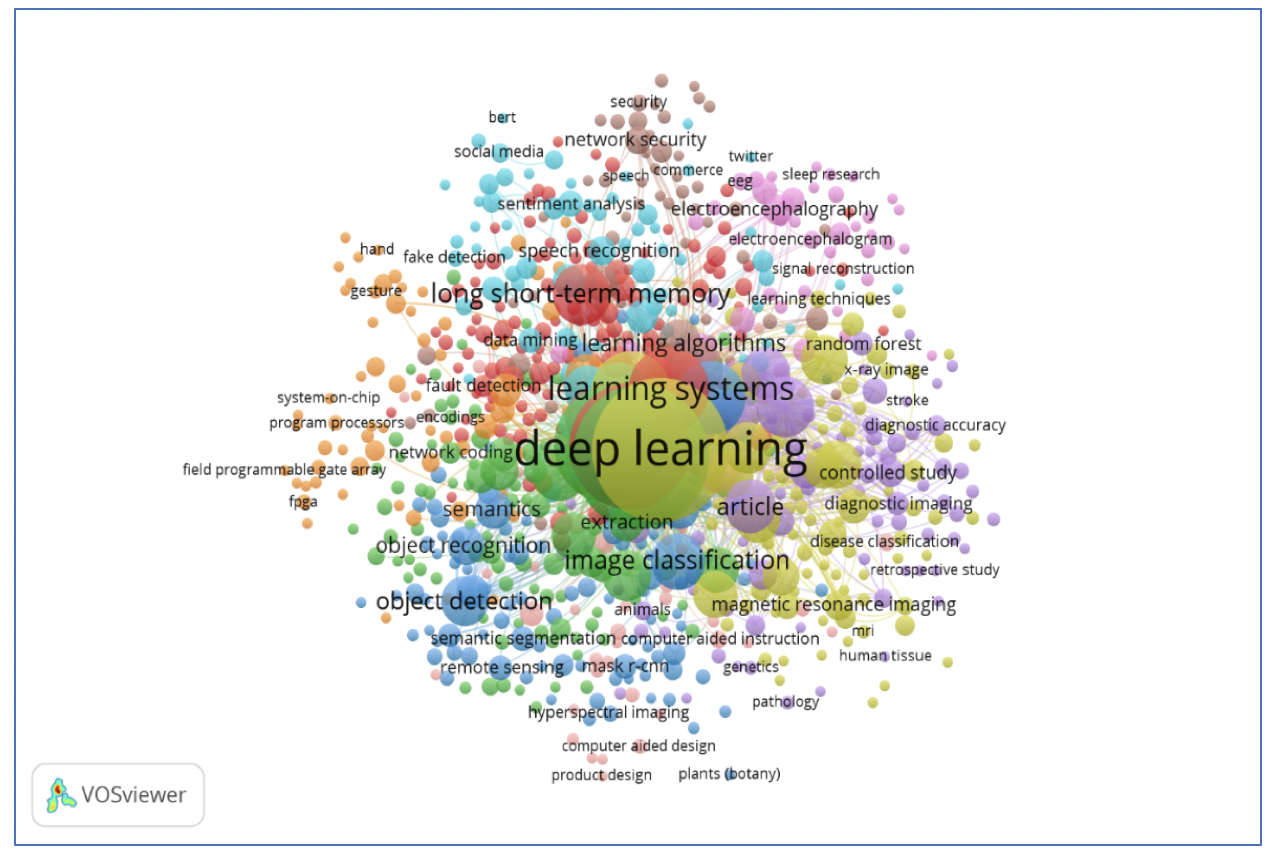
This study presents a bibliometric analysis of research trends in Convolutional Neural Networks (CNN) published in 2023. Using the Scopus database, metadata for 2,185 journal articles was extracted based on criteria including open access status, English language, and classification under Computer Science. The research employed a systematic methodology involving data extraction, preprocessing, and network visualization. VOSviewer was used to map co-authorship networks, keyword co-occurrence, and citation patterns, while Python supported advanced data processing, topic modeling, and trend analysis. Keyword analysis highlighted the prominence of terms such as "deep learning," "learning systems," "image classification," and "object detection," indicating the diverse and interdisciplinary applications of CNN technology. The co-authorship network revealed China, India, and the United States as key centers of international research collaboration, demonstrating global engagement in advancing CNN studies. Citation analysis showed a skewed distribution where most publications received between zero and two citations, though some articles garnered significantly higher attention, with citations reaching up to 57 within the same year of publication. This suggests that a few studies have rapidly influenced the field despite the overall low citation count typical of recent papers. By integrating quantitative bibliometric techniques with AI-assisted qualitative insights, this study offers a comprehensive overview of the dynamic and rapidly evolving landscape of CNN research in 2023, guiding future academic and practical endeavors.
Downloads