Measuring Thermal Conductivity and Magnetic Strength Using Low-Cost Sensors Based on an Open-Source Platform Arduino
DOI:
https://doi.org/10.59511/riestech.v4i2.118Keywords:
Low-cost sensors, Arduino, Thermal conductivity, Magnetic strengthAbstract
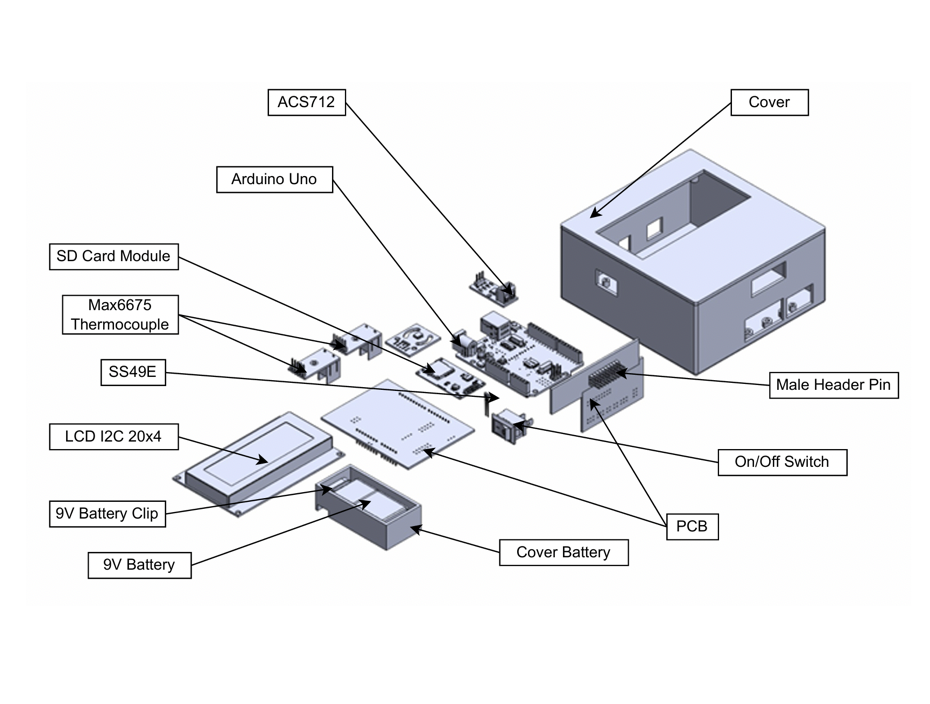
The use of low-cost sensors controlled by open-source microcontrollers (Arduino, ESP32) is investigated in this study not only to measure electrical, thermal, and magnetic values but also to investigate intrinsic material properties such as thermal conductivity and magnetic strength. Four sensors are used in this study such as SS49E, MAX6675, ACS712, and HMC5883L. Their performance is evaluated in monitoring a carbon rod subjected to 29.9 V DC current and the measurement results are displayed on a 20x4 I2C LCD and stored in CSV format on an SD Card. The MAX6675 thermocouple sensor shows the most stable and reliable results for surface temperature measurement, which is supported by reference multimeter readings. However, the use of multiple sensors simultaneously reveals interference issues, indicating the need for electrical isolation or signal multiplexing in future designs. This study contributes to the advancement of affordable open-source instrumentation as a viable alternative to commercial measurement tools, emphasizing the shift from raw signal acquisition to meaningful property computation.
Downloads