Applying Structural Reliability to Risk-Based Inspections of Underwater Crude Oil Pipelines
DOI:
https://doi.org/10.59511/riestech.v4i2.126Keywords:
Risk Based Inspection, Undersea Pipeline, Structural Reliability, Internal Corrosion, Probability of Failure, Consequence of FailureAbstract
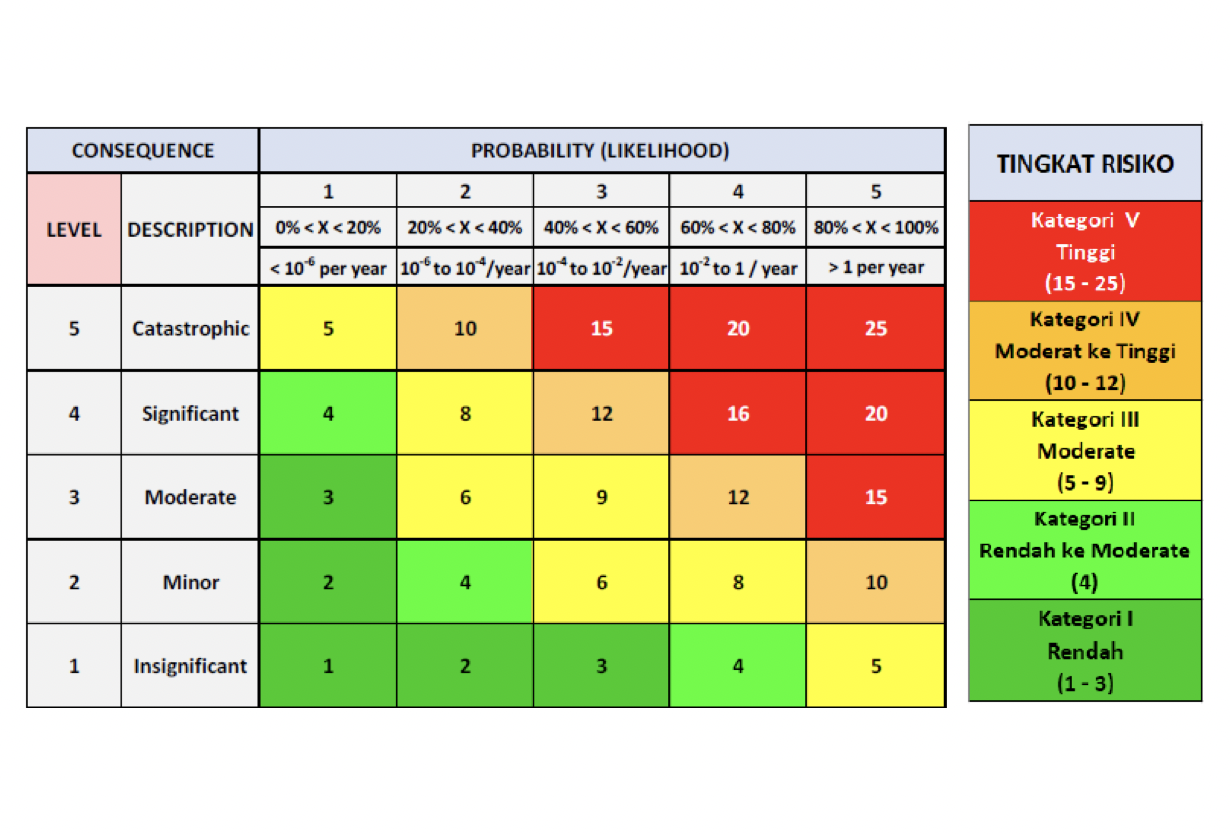
This study investigates the application of structural reliability methods in risk-based inspections (RBIs) for subsea crude oil pipelines. Given the increasing reliance on submarine pipeline infrastructure in offshore oil and gas operations, maintaining its integrity is critical to operational safety and environmental protection. This study uses inspection data from smart pigging operations carried out in 2020 and 2024 on 28.7 km of 12-inch underwater pipes. Using API RP 581 (2020) and First-Order Second-Moment (FOSM) structural reliability theory, this study quantitatively assesses the probability of failure (PoF) and the consequence of failure (CoF). Results showed active internal corrosion, with pitting corrosion identified as the dominant degradation mechanism. Risk projections from 2024 to 2030 reveal unacceptable levels of risk in 2030 if mitigation strategies are not implemented. Based on the financial impact and business risk thresholds, a tailored inspection and maintenance strategy is proposed. These findings support the optimization of inspection intervals and highlight the importance of corrosion control measures such as routine pigging and inhibitor injections.
Downloads