Failure Analysis of Economizer Tube Leakage Caused by Localized Internal Corrosion at Weld-Root Regions
DOI:
https://doi.org/10.59511/riestech.v4i3.163Keywords:
economizer tube, failure analysis localized internal corrosion, weld-root penetration, wall thinning, SEM–EDSAbstract
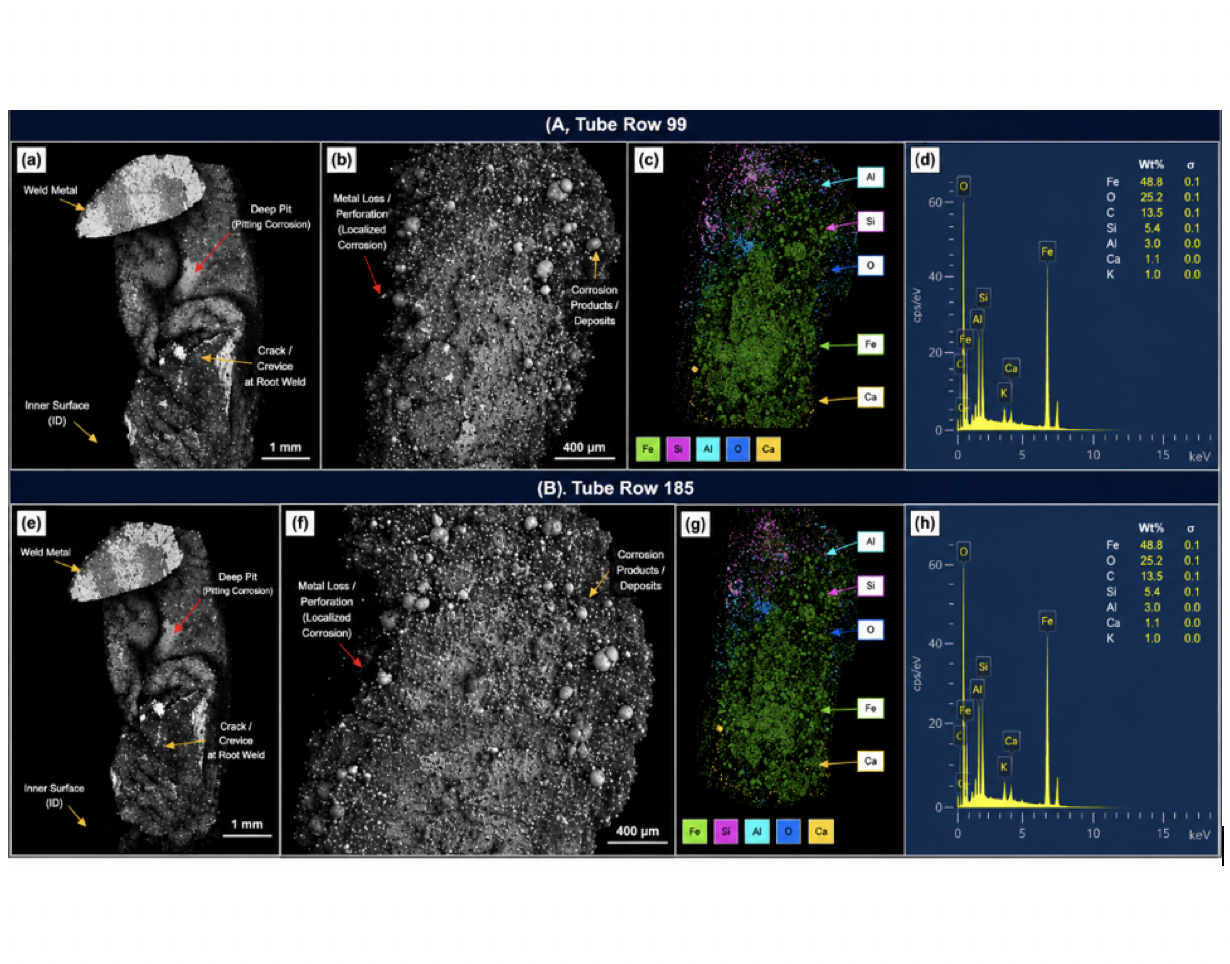
Economizer tube leakage is a common failure in industrial boiler systems and may result in unplanned shutdowns and significant production losses. This study investigates the leakage failure of ASTM A210 Grade C economizer tubes removed from a pulp and paper boiler after long-term service. The investigation combined field inspection, wall-thickness measurements, chemical composition analysis, hardness testing, metallography, and SEM–EDS characterization to determine the degradation mechanism responsible for leakage. Leakage was detected in Tube Row 99 and Tube Row 185 near circumferential and stopper-weld locations. Visual examination revealed that damage was concentrated in the weld-root vicinity, whereas adjacent tube sections remained comparatively unaffected. Thickness measurements showed severe localized wall loss, with the minimum remaining thickness decreasing from 3.00 mm to 1.85 mm. Chemical composition analysis confirmed compliance with ASTM A210 Grade C requirements, while hardness testing showed no evidence of abnormal hardening or thermal degradation. Metallographic examination revealed oxide-layer deterioration and corrosion penetration adjacent to the weld-root interface. SEM–EDS analysis identified corrosion products dominated by iron oxides, confirming an internally initiated corrosion process. Available operating records indicated fluctuations in dissolved oxygen concentration, although the monitoring data were incomplete. The results indicate that excessive weld-root penetration promoted deposit retention and localized environmental variations, creating conditions favorable for oxide-layer deterioration and localized internal corrosion. Progressive wall thinning adjacent to the weld-root region subsequently led to through-wall perforation and leakage. The failure mechanism was identified as weld-root-associated localized internal corrosion, while dissolved oxygen fluctuations were considered a contributing factor to corrosion propagation rather than the primary cause of failure.
Downloads